 The Merridew Review
You will learn how to design subtle, ambient sound effects that generate curious wonder in domestic or garden settings. You will be able to assemble small playback devices that deliver gentle confusion without causing fright or alarm.
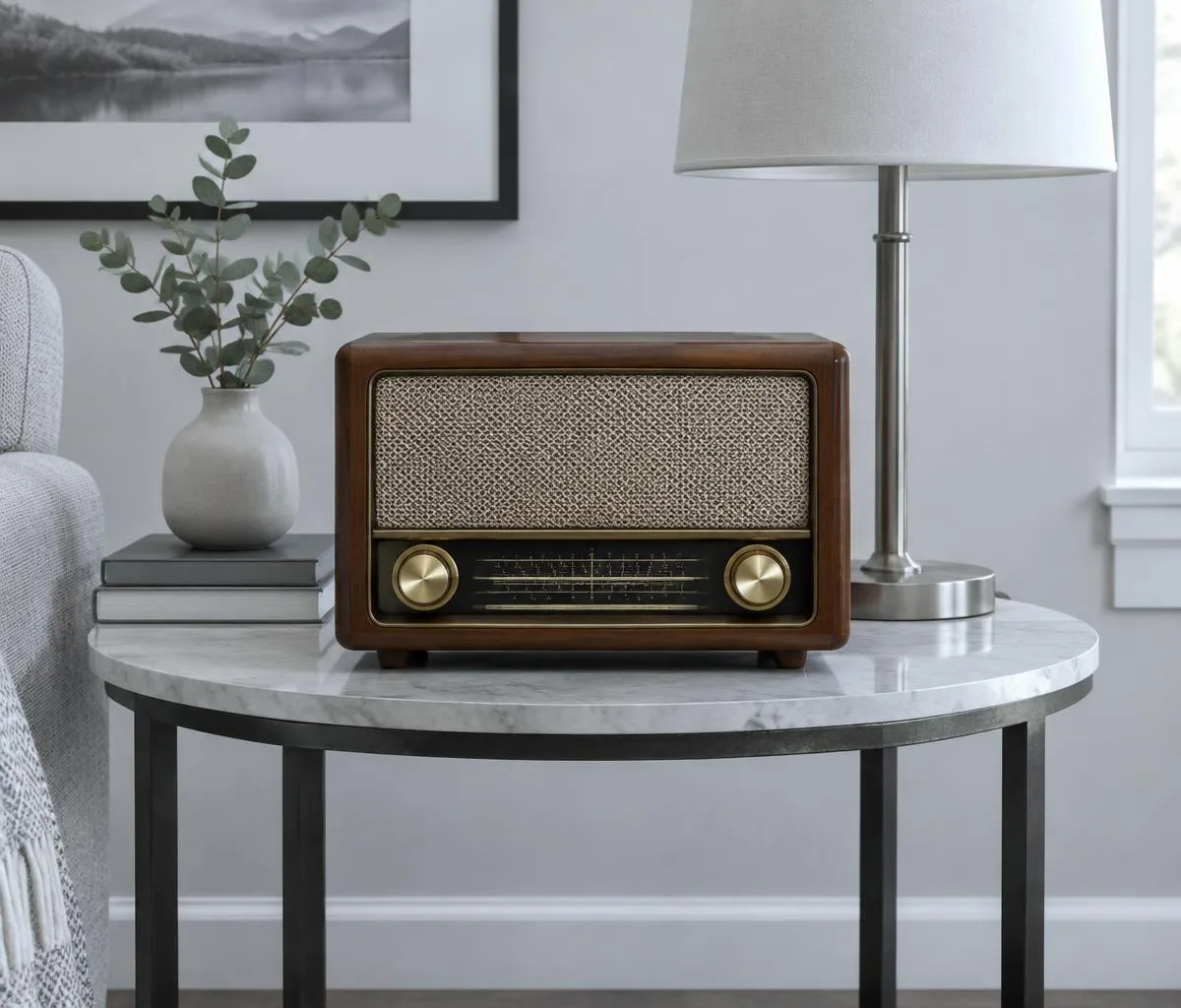
- Keep decibel levels below normal speech volume so the sound remains an intriguing curiosity.
- Choose whimsical source audio, such as an imaginary cricket or an antique grandfather clock tick.
- Conceal miniature speakers away from personal possessions to respect personal space.
Among the varied diversions suitable for an evening gathered in the drawing room, few devices arouse such quiet fascination as a sound that cannot be readily placed. Unlike visual trickery, which often requires elaborate apparatus or sudden physical revelation, the acoustic illusion addresses the imagination through the ear alone. When executed with decorum and gentle restraint, such an exercise does not startle or alarm the company. Instead, it invites those present to pause their conversation, tilt their heads, and engage in a communal pursuit of an elusive phantom.
The success of an acoustic diversion rests upon subtlety. The objective is never to cause distress or to shock the nervous sensibilities of one's guests. Rather, the host creates a minor puzzle, an auditory curiosity that mimics the natural eccentricities of an old house, an unfamiliar mechanical specimen, or an errant songbird. By observing careful boundaries of sound pressure, interval timing, and concealment, one may orchestrate a delightful parlor mystery that concludes with laughter and mutual admiration for the craft involved.
The Charm of the Mysterious Sound Effect
Acoustic illusions occupy a distinct station within the history of domestic amusement. During the nineteenth century, mechanical singing boxes, ventriloquial demonstrations, and concealed pneumatic whistles entertained guests without the coarse disruption associated with broader practical jokes. The appeal lies in the human inclination to resolve ambiguity. When the eye fails to confirm what the ear reports, the mind supplies hypotheses, attributing the noise to settling timbers, chimney drafts, or peculiar atmospheric conditions.
This species of jest requires patience, both in preparation and in performance. A blaring horn or a sudden crash produces mere fright, which is rarely welcomed by sensitive listeners and invariably terminates the pleasant atmosphere of a gathering. In contrast, an acoustic illusion designed with modest acoustic energy encourages speculative conversation. Guests exchange glances, question their own senses, and offer theories regarding the origin of the sound, transforming passive listeners into active investigators.
Moreover, the exercise demonstrates the host's regard for the comfort of the company. Because the sound operates at the very margin of perception, it does not interrupt important discourse or cause discomfort to domestic pets. It presents itself as an incidental feature of the room, allowing the company to engage with the mystery at their own leisure while the host maintains an attitude of polite unconcern.
Selecting Soundscapes: Birds, Whistles, and Fictional Clocks
The composition of the audio sample governs the success of the entire enterprise. A sound chosen for a parlor diversion must possess two qualities: plausibility within the domestic setting and a distinct lack of spatial clarity. Complex, rich orchestral recordings or modern synthetic tones immediately betray their artificial origin. The most effective options are simple acoustic events that might reasonably occur within a well-tended residence.
Avian calls provide an excellent basis for such an illusion. A faint, single-note chirp, modeled upon the European robin or the common cricket, sits comfortably within the ambient noise of a residence. Guests will readily assume that a small creature has found ingress behind a wainscot or beneath an open sash. Water droplets offer a similar advantage. A soft, single water drip occurring at irregular moments suggests an obscure plumbing defect, prompting mild curiosity without immediate alarm.
Mechanical sounds, such as the escapement of a fictional clock or the faint hum of a miniature dynamo, serve equally well in rooms furnished with books or curiosities. A rhythmic, dry click suggests an antique chronometer hidden behind the volumes of a bookcase. The following table outlines three traditional audio profiles and their physical properties:
| Sound Profile | Dominant Frequency | Duration per Pulse | Plausible Source |
|---|---|---|---|
| Cricket or Meadow Chirp | 4.2 kHz to 4.8 kHz | 80 to 120 milliseconds | Hearth, skirting board, planter |
| Solitary Water Drop | 800 Hz to 1.4 kHz | 40 to 60 milliseconds | Window sash, radiator valve |
| Escapement Click | 2.1 kHz to 2.7 kHz | 15 to 30 milliseconds | Mantel clock, curio cabinet |
When preparing these sound files on a playback unit, ensure that the recording contains no background hiss, tape noise, or sudden digital cut-offs. A file should begin and end with complete silence. A hard digital start produces an audible pop in small loudspeakers, instantly revealing the presence of a electronic circuit to any attentive ear.
Volume Regulation: Why Faintness Outperforms Loudness
The primary error committed by inexperienced hosts is the application of excessive amplitude. In acoustic deception, faintness is not merely a stylistic preference; it is a technical necessity. When a sound is loud, the human auditory system calculates its origin with swift accuracy through interaural time and level differences. When a sound approaches the listener at a level barely distinct from the ambient room noise, the brain struggles to triangulate the source, creating the impression that the noise is everywhere and nowhere at once.
Domestic living areas typically maintain an ambient sound floor between 38 and 44 decibels during a calm evening of reading or light conversation. The sound reproduction device must be calibrated so that its emission measures no more than 3 to 5 decibels above this baseline at the listener's ear. At a distance of 3 meters, the playback should produce roughly 46 to 48 decibels. At this modest volume, a listener seated near the fireplace will look toward the window, while a listener near the window may glance toward the hallway.
To verify the level prior to the arrival of company, conduct a practical listening trial. Set the apparatus in its intended station, walk to the farthest corner of the chamber, and remain motionless for two minutes. If the sound commands your attention immediately, the output is set too high. It should be sufficiently quiet that a rustling newspaper or a polite cough entirely masks its occurrence, forcing the company to wait patiently for its recurrence.
Discreet Placement in Domestic Parlors and Library Corners
The positioning of the reproducing transducer dictates how sound waves propagate throughout the chamber. Direct line-of-sight between the loudspeaker and the audience must be avoided under all circumstances. If a guest can look directly at the aperture of the speaker, their visual faculty will assist their hearing, resolving the illusion in short order. Instead, one should exploit boundary loading and acoustic reflection to disperse the sound path.
A library provides exceptional opportunities for concealment. A miniature speaker may be positioned behind the leather spines of hollowed dummy books, or nestled flat on top of a seven-foot bookcase, facing upward toward the plaster ceiling. When the sound reflects off a hard, flat ceiling, it loses its direct directional cues, arriving at the floor as a diffuse, ambient phenomenon. The company will frequently perceive the sound as originating from the ceiling timbers or an upper storey.
Other fruitful positions include the following domestic stations:
- Behind heavy drapery: Fabric dampens harsh high frequencies, softening the impact of a cricket chirp while allowing the fundamental tone to pass into the room.
- Inside an unlit hearth: The masonry of a chimney flue creates natural reverberation, lending an authentic, hollow character to dripping water or wind-whistle effects.
- Within an ornamental planter: Positioning a small transducer amid the leaves of a Boston fern masks the device visually while providing a natural context for organic sounds.
- Underneath an upholstered divan: The soft batting absorbs direct transients, creating a muffled presence that seems to emanate from the floorboards themselves.
Ensure that the device does not vibrate against loose wooden panels, ceramic saucers, or glass vitrines. A mechanical rattle resulting from sympathetic vibration will immediately draw the eye to the physical hiding place, undoing an otherwise flawless arrangement.
Pacing Interval Cycles to Sustain Curious Inquiries
A sound that repeats with mechanical regularity quickly reveals its artificial nature. Human perception is acutely tuned to rhythmic patterns. A chime that sounds precisely every thirty seconds will be recognized as a timer or an electrical gadget within three cycles. Conversely, intervals of erratic or prolonged duration sustain curiosity over an extended period, preventing systematic search efforts by the guests.
The ideal duration between acoustic events ranges between 4 minutes and 11 minutes. This window permits the room to return to normal conversation after each occurrence. Just as the company has forgotten the strange little chirp or click, the sound recurs, prompting renewed speculation. If the company actively rises from their chairs to search the room, the device should enter a period of prolonged dormancy.
To establish an effective schedule without manual intervention, modern experimenters frequently employ programmable interval micro-controllers or specialized sound-looping devices. The following structure represents a balanced twenty-minute sequence for an evening gathering:
- Initial emission: A brief pulse of 90 milliseconds, occurring seven minutes after the guests have settled into their seats.
- Secondary confirmation: A twin pulse, spaced 300 milliseconds apart, arriving four minutes and twenty seconds after the initial sound.
- The quiet interval: A deliberate lull of nine minutes, allowing conversation to resume uninterrupted and dispelling active suspicion.
- Final cue: A soft single pulse, slightly attenuated, serving as the prelude to the host's revelation.
Should the host prefer manual triggering, miniature radio-frequency transmitters concealed within a waistcoat pocket provide excellent control. A gentle press of a silent button, performed while passing the tea tray, ensures that the host's hands remain entirely innocent of suspicion.
The Graceful Explanation: Sharing the Secret Behind the Sound
An acoustic illusion must possess a courteous termination. The purpose of parlor amusement is to delight, not to humiliate or frustrate one's companions. Prolonging the mystery to the point where guests disassemble clock cases, peer down chimney flues with candles, or suspect their own cognitive faculties breaches the laws of hospitality. A host should observe the room closely, selecting the moment when curiosity is high and amusement remains intact.
The revelation should be made with lighthearted modesty. When the discussion turns once more to the peculiar noise, the host may rise, retrieve the concealed device from its hiding place, and place it upon the low table before the company. Demonstrating the mechanism openly transforms any lingering bewilderment into appreciation for the ingenuity of the apparatus. Guests invariably enjoy inspecting the speaker, testing the volume control, and hearing the raw audio file isolated from its room acoustics.
It is customary during the explanation to compliment the keen hearing of those who first detected the faint sounds. By commending their observation, the host ensures that the company feels honored rather than deceived, cementing the memory of a pleasant and unconventional evening.
Common Mistakes to Avoid
Even a well-conceived parlor jest can falter if basic physical and social rules are disregarded. The most frequent errors include:
- Using alarming sound selections: Recordings of weeping, breaking glass, or alarms distress guests and destroy the convivial mood of the household.
- Premature repetition: Setting the timer to fire every few seconds transforms an intriguing mystery into an irritating distraction.
- Neglecting battery reserves: An uninspected battery may fail halfway through the evening or emit a sharp low-voltage whine that exposes the mechanism.
- Inappropriate targets: Imposing acoustic illusions upon guests suffering from known hearing sensitivities or nervous fatigue is an unpardonable breach of hostly manners.
- Over-defensiveness: If a guest discovers the concealed unit early through chance, confess the jest immediately with good humor rather than attempting clumsy denials.
Practical Preparation for the Parlor Host
To prepare an acoustic diversion for an upcoming gathering, begin by selecting an appropriate chamber within your home. Spend twenty minutes seated in silence during the identical hour of the planned event, noting the baseline sounds of the room: the ticking of a grandfather clock, the dull murmur of street traffic, or the hiss of heating radiators. Your chosen audio sample must complement, rather than clash with, this existing auditory tapestry.
Acquire a compact, battery-operated audio playback unit equipped with a clean flash memory card or a secure wireless receiver. Test the sound file at three distinct output levels, enlisting the aid of a family member or trusted confidant to confirm that the source cannot be localized from the principal seating positions. Once satisfied with the concealment and acoustic balance, charge the apparatus fully on the morning of the gathering. With careful attention to these small technical particulars, you will offer your guests a refined and memorable demonstration of domestic acoustic physics.
This publication provides comedic scripts and social commentary for recreational amusement only; readers must exercise sound personal judgment and ensure all activities remain safe, lawful, and mutually agreeable. Disclaimer