 The Merridew Review
You will acquire several detailed plans for wholesome surprises that amuse colleagues, classmates, and family members without causing distress. These scripts outline required household props, timing considerations, and the proper moment to conclude the amusement.
- Select props that leave no lasting residue or damage on personal property.
- Establish an immediate reveal so that confusion resolves into shared laughter within moments.
- Evaluate the temperament of your associate before introducing any unexpected element into their routine.
A well-conceived jest occupies an honorable place in civil society, provided it is executed with restraint, affection, and meticulous attention to propriety. In an age often marked by abrasive spectacle, the quiet tradition of the parlor prank offers a welcome alternative: a momentary suspension of ordinary routine that invites shared laughter rather than embarrassment. The purpose of such an undertaking is never to demean, nor to cause distress or physical inconvenience, but rather to present a curious anomaly that briefly challenges the senses before dissolving into good cheer.
The scripts and procedures set down here have been prepared for three distinct arenas of daily life: the workplace desk, the domestic pantry, and the schoolroom blackboard. Each scenario has been designed to operate within narrow bounds of etiquette and safety. When properly managed, these diversions consume very little time, cost virtually nothing, and leave behind neither permanent disorder nor wounded pride.
The Guiding Principles of Harmless Surprise
Before one alters a single item on a colleague's desk or adjusts an object in a family kitchen, one must commit to three non-negotiable standards: reversibility, brevity, and emotional safety. Reversibility demands that the environment can be returned to its exact previous state within two minutes, with no residue, breakage, or loss of function. Brevity requires that the mystery resolve itself swiftly, avoiding the prolonged anxiety that turns amusement into frustration. Emotional safety demands an intimate understanding of the participant's temperament, current burdens, and dignity.
A jest ceases to be civil the moment it introduces fear, disgust, or financial cost. For this reason, the considerate wit never tampers with personal sustenance, items of sentimental value, spectacles, keys, or digital devices containing critical unsaved work. Furthermore, the humor must always center on the absurdity of the situation rather than any personal deficiency of the subject.
| Element of the Jest | Permissible Approach | Impermissible Deviation |
|---|---|---|
| Physical Environment | Rearranging inert, non-fragile objects on an open surface. | Altering structural fixtures, adhesives on painted drywall, or damp areas. |
| Time Investment | Resolved and restored in under three minutes of discovery. | Allowing confusion to persist throughout a full morning or shift. |
| Personal Property | Inanimate tools such as wooden rulers, paper clips, and pads. | Automotive keys, spectacles, prescription bottles, or wallets. |
| Social Dynamics | Conducted among peers of equal social standing or by elders. | Directed downward at subordinates, probationary staff, or new pupils. |
The Desktop Stationery Substitution for the Quiet Office
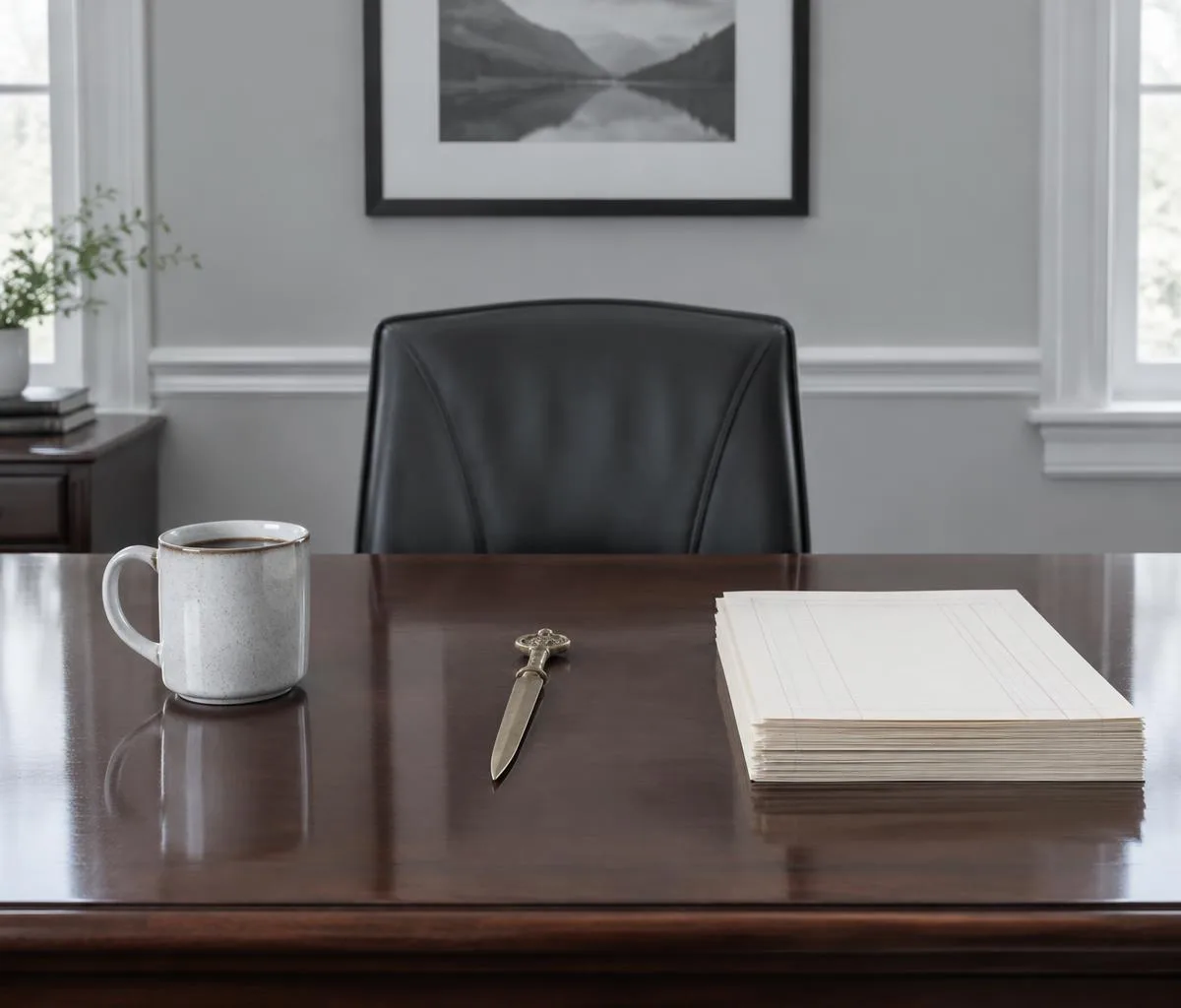
The modern administrative desk is a study in quiet habit. A worker reaches for writing implements, paper fasteners, and note pads without conscious deliberation. The following substitution relies upon replacing these functional staples with subtly altered duplicates, provoking a moment of harmless perplexity before the normal order of the morning is restored.
This script requires five minutes of preparation on the previous evening or before the arrival of the colleague in question. It is best applied to a colleague with whom one enjoys an established, cordial rapport. The substitution must never involve critical files, time-sensitive correspondence, or active client contracts.
- Procure the miniature variants. Obtain a miniature stapler measuring roughly two inches in length, miniature paper clips of three-quarter-inch dimension, and an oversized novelty pencil or pen that writes reliably in standard blue ink.
- Conduct the swap quietly. Place the colleague's standard stapler, clips, and main pen into the top center drawer of their desk, neatly arranged in a tray so that nothing is concealed.
- Position the substitutes. Set the miniature stapler exactly where the full-sized implement usually rests. Arrange three oversized novelty pens in the pen cup, ensuring their tips are exposed and ready for use.
- Observe from a polite distance. When the colleague reaches for the stapler, allow them a few seconds to notice the scale discrepancy. If they display mild confusion, maintain a pleasant, non-committal expression until they open the drawer to retrieve their standard equipment.
Should the colleague reach for the miniature tool and attempt to bind a document, step forward immediately to hand them their standard tool. The revelation should be instantaneous, accompanied by an offer of a fresh cup of tea or coffee to begin the workday on a warm footing.
The Bewildering Domestic Cupboard Reorganization
The domestic sphere contains its own established geographies. In most households, family members can retrieve a tin of Earl Grey tea or a box of rolled oats in complete darkness, guided solely by muscle memory. The domestic cupboard reorganization gently disrupts this pattern by introducing an unexpected, meticulous scheme of organization based upon an absurd criterion, such as alphabetical order or color harmony.
To execute this diversion safely, choose an enclosed dry-goods pantry rather than a refrigerator or a medicine cabinet. Food items that must be kept separated for severe allergy reasons must never be touched or placed in proximity to one another. Perishable items, glass decanters, and heavy stoneware jugs must remain in their original positions to avoid any risk of spillage or injury.
Begin by selecting approximately twelve to fifteen shelf items that share similar container sizes: canned tomatoes, dried beans, canisters of baking soda, and packages of pasta. Arrange these goods in rigid alphabetical sequence, from artichoke hearts to ziti pasta, with all commercial labels facing outward at an exact ninety-degree angle. Place a small, handwritten index card upon the shelf bearing the notation: Catalogued pursuant to the Dewey Decimal and Culinary Index, Revision 4.
The entertainment in this script arises when the cook of the house opens the door to fetch an ordinary ingredient and pauses, struck by the sudden, museum-like precision of the pantry. When they comment upon the arrangement, provide them with a pencil and clipboard, suggesting with a straight face that the spices are scheduled for reorganization after luncheon. Within ten minutes, assist them in returning any displaced ingredients to their customary shelves.
The Harmless Classroom Blackboard Conundrum
In an educational setting, humor must always preserve the authority of the instructor and the safety of the pupils. A chalkboard conundrum offers a diversion that sharpens critical thinking while providing a lighthearted break from routine. This exercise is suitable for pupils in secondary forms, particularly during the brief interval between morning assembly and the commencement of formal studies.
The instructor or an approved senior monitor arrives in the classroom five minutes before the bell and transcribes a seemingly impenetrable mathematical or grammatical formulation upon the board in neat, formal cursive script. The text must appear entirely authentic at first glance, using genuine academic vocabulary, while concealing a simple, whimsical observation beneath its surface.
Consider the following specimen, which may be transcribed in the center of the slate under the heading Preliminary Logic Exercise:
"If thirty-four dry beans reside in an urn, and seven are removed by a left-handed botanist while nine are added by an apprentice baker, what is the precise name of the baker's ginger cat?"
Below the proposition, draw two neat columns labeled Empirical Evidence and Theoretical Deductions, leaving both columns entirely blank. When the pupils assemble and begin to puzzle over the mathematical operations, allow two minutes of earnest discussion. As soon as a pupil notes that the question has no connection to the arithmetic, congratulate that student upon their keen reading comprehension, award them an illustrative merit mark, erase the board, and proceed directly to the day's scheduled syllabus.
Managing the Reveal with Good Grace
The reveal is the fulcrum upon which the entire undertaking balances. If the conclusion is delayed too long, the subject feels manipulated; if it is announced too abruptly, the theatrical charm of the situation is lost. The ideal interval between discovery and reveal ranges between thirty and ninety seconds.
When the moment arrives to conclude the jest, the instigator must observe three rules of deportment:
- Acknowledge responsibility promptly. Never allow another bystander or junior colleague to be suspected of having interfered with property or schedules. Step forward with a clear, polite statement such as, "The responsibility rests entirely with me, Arthur."
- Produce the missing item instantly. If an object has been temporarily substituted, present the original article immediately, polished and ready for service.
- Assist with the restoration. If goods were rearranged, your hands must do the work of returning them to their previous order, allowing the other person to remain comfortably at rest.
Laughter should be invited, not demanded. If the subject does not find the scenario amusing, the practitioner must not attempt to explain the humor, as an explained jest is an admission of failure. A simple, dignified apology: "I see that my timing was ill-judged this morning, and I beg your pardon," resolves the situation without rancor.
Criteria for Immediately Halting a Jest
There are circumstances under which an intended amusement must be abandoned without hesitation, even midway through its execution. Sensitivity to the room and the emotional temperature of the subject must always override the desire to see a script through to its finish.
The practitioner must instantly restore all items and abandon the scenario upon noticing any of the following indications:
- Signs of genuine distress or fatigue. If the subject arrives with hurried footsteps, visibly trembling hands, or signs of an impending professional crisis, the jest must be canceled immediately. The ordinary order must be restored before they even notice the alteration.
- Involvement of third-party authorities. If an office manager, client, inspector, or school headmaster enters the scene unexpectedly, the scenario must be extinguished at once. Legitimate administrative authority must never be drawn into private parlor theatricals.
- Physical clumsiness or danger. If the subject begins to handle heavy objects awkwardly in search of a missing tool, or if they appear likely to lose balance, step forward and end the scenario before an accident can occur.
- Expressions of resentment. If the subject asks with cold seriousness, "Who has moved my papers?", the jest has already failed. Offer an immediate, courteous apology and restore the workspace without lingering.
In all matters involving domestic disputes or workplace grievances, the advice of an experienced professional mediator, human resources director, or legal counsel must be consulted if boundaries have been breached. A prank must never be used to address an interpersonal conflict or punish a peer.
Common Mistakes in Lighthearted Pranks
The most frequent error committed by inexperienced jesters is the assumption that grander scale equals greater amusement. In truth, the charm of a jest is inversely proportional to its scale. Large-scale manipulations of property create clean-up burdens that turn an intended courtesy into an imposition.
Another grave error lies in utilizing physical adhesives, paints, or substances that produce odors. Tape often strips the veneer from historic oak desks, liquid ink can ruin archival ledger paper, and unfamiliar scents can trigger acute respiratory sensitivities. Every tool employed in a jest must be completely dry, inert, and capable of being whisked away in an instant.
Finally, one must avoid repeating the same jest. The unexpected delight of a tiny stapler or an alphabetized pantry relies entirely upon its novelty. A second occurrence transforms wit into deliberate harassment.
Practical Next Steps for the Considerate Wit
Those who wish to cultivate the delicate art of the parlor jest should begin with modest ambitions and careful observation. Success depends far more upon social tact than upon elaborate apparatus.
Begin by taking stock of your immediate surroundings during the coming week. Observe the daily habits of your circle: who appreciates a momentary riddle, who guards their desk with particular jealousy, and who is currently under professional strain. Eliminate from your plans any individual who appears preoccupied with serious matters or who has recently experienced personal bereavement or illness.
Select a single, straightforward substitution from the office script, purchase the miniature implement from a local stationer, and test the mechanism yourself to ensure it operates smoothly. Choose a quiet morning when no deadlines loom, execute the substitution with precision, and keep your attention firmly fixed upon the comfort and good humor of your friend. If conducted in this spirit, the result will be an agreeable memory that enlivens an otherwise ordinary Tuesday.
This publication provides comedic scripts and social commentary for recreational amusement only; readers must exercise sound personal judgment and ensure all activities remain safe, lawful, and mutually agreeable. Disclaimer